
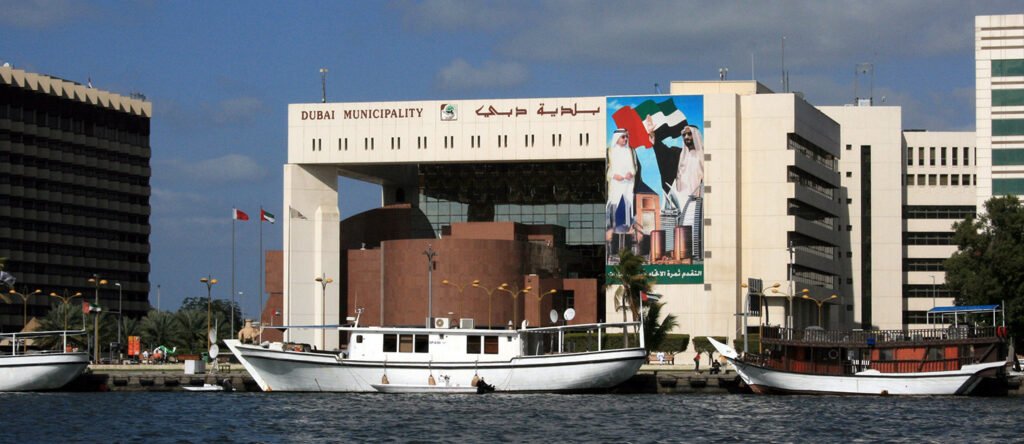
- Dubai Municipality (DM) approval is the mandatory government clearance required before construction, renovation, fit-out, or structural change on any Dubai mainland plot outside the free zones.
- It is obtained through the Dubai Building Permit System (Dubai BPS), the emirate’s single-window platform, and it is issued only after drawing review, authority NOC coordination, and site inspection confirm the work meets the Dubai Building Code.
- That’s the short version. The long version and the part that actually determines whether your project sails through or sits in resubmission for three weeks is knowing which DM approval type your scope falls under, which NOCs run in parallel versus in sequence, and where the paperwork most commonly gets rejected.
Key takeaway: DM approval isn’t one certificate; it’s a staged system run through the Dubai BPS single window, and it only applies to non-free-zone mainland plots. If your plot sits in JAFZA, on Palm Jumeirah, in a DDA-governed zone, or inside a DIEZ community, you’re dealing with Trakhees, DDA, or the relevant free-zone regulator instead, not DM.
What Is Dubai Municipality (DM) Approval, Exactly?
Dubai Municipality is the government body responsible for building control, planning, and construction regulation across Dubai’s mainland areas. DM approval, sometimes called a building permit, fit-out permit, or drawing approval depending on scope, is the technical sign-off confirming your architectural, structural, and MEP (mechanical, electrical, plumbing) drawings comply with the Dubai Building Code before any physical work starts.
DM does not work in isolation. It sits inside a “Single Window System for Building Permits,” a unified electronic platform that Dubai Municipality operates jointly with other licensing authorities: Dubai Development Authority (DDA) for DIFC-adjacent and certain designated zones, and Trakhees (the Department of Planning and Development under Ports, Customs and Free Zone Corporation) for JAFZA, Palm Jumeirah, and other Nakheel-master-planned communities.
The platform is also electronically linked to Dubai Civil Defence (DCD), Dubai Electricity and Water Authority (DEWA), the Roads and Transport Authority (RTA), and the telecom providers (Etisalat and du), so their NOCs are coordinated through the same submission rather than chased separately.
This is the first and most consequential jurisdiction check on any project: confirm your plot falls under DM before you build a submission package. A project physically located in a Trakhees- or DDA-governed zone will not progress through a DM-only submission, no matter how complete the drawings are.
DM Approval Types: Which One Does Your Project Need?
DM approval isn’t a single, fixed product; it’s a family of permit types matched to project scope. Picking the wrong one is one of the most common causes of a rejected or delayed submission.
| DM Approval Type | Typical Trigger | Status |
|---|---|---|
| Building Permit | New construction, structural alterations, load changes, mezzanines | REQUIRED when scope is structural |
| Fit-Out Permit | New partitions, new wet areas, MEP changes inside an existing shell | REQUIRED for non-structural interior works with MEP or layout changes |
| Change-of-Use / Activity Amendment | Converting a unit’s approved use (e.g., retail to F&B, office to clinic) | CONDITIONAL triggered only when the new activity differs from the approved use on file |
| Demolition Permit | Full or partial demolition ahead of redevelopment | REQUIRED whenever demolition is part of the scope |
| Annex / Additional Works Permit | Extensions, rooftop additions, or ancillary structures to an already-permitted building | CONDITIONAL on the nature of the addition |
| Signage / Façade Permit | External signage, façade cladding, or elevation changes | CONDITIONAL, often layered on top of a fit-out or building permit, not a substitute for it |
| Cosmetic / Decor-Only Works | Paint, flooring, loose furniture, no partitions, no MEP | VERIFY DM periodically revises which light-touch scopes qualify for a reduced-review path; confirm current thresholds via Dubai BPS before assuming your project qualifies |
A practical rule of thumb: if your scope touches a wall, a wet area, an MEP system, or the approved use of the unit, assume you need at minimum a Fit-Out Permit and confirm from there; don’t default to the lightest category just because the work looks minor on-site.
Which Approval Route Applies — DM, DDA, or Trakhees?
| Factor | Dubai Municipality (DM) | DDA / Trakhees / Free Zone |
|---|---|---|
| Applicable areas | Dubai mainland, non-free-zone plots | DIFC and designated DDA zones; JAFZA, Palm Jumeirah, Nakheel communities (Trakhees); DIEZ zones |
| Governing code | Dubai Building Code, Al Sa’fat green building system | Zone-specific technical circulars and drawing standards set by the respective authority |
| Submission platform | Dubai BPS (dubaibps.dm.gov.ae) / Dubai Building Permits app | Authority-specific portals; some routed through the same single-window backbone |
| Master developer NOC | Not applicable unless the building has an owners’ association or landlord | Often required first (e.g., Nakheel NOC before Trakhees submission) |
VERIFY: Confirm your plot’s exact jurisdiction against DM’s plot/Affection Plan records or the Dubai BPS portal before starting design; zone boundaries occasionally shift, and a plot bordering a free zone is not automatically inside it.
DM Approval Rules Specific to Dubai Areas and Communities
DM’s technical requirements are emirate-wide, but how they play out on the ground varies by area — worth flagging before you scope a submission timeline.
- Older, established districts (parts of Deira, Bur Dubai, Al Quoz): a meaningful share of buildings predate digitized DM records. Where original approved drawings can’t be traced in the system, an as-built architectural survey is typically required before a modification permit can even be submitted.
VERIFY current survey requirements and timelines for your specific plot through DM directly rather than assuming a fixed cost or duration. - High-rise and strata buildings (Downtown Dubai, Business Bay, JLT-adjacent mainland towers): fit-out submissions generally need a scope-specific NOC from the building’s owners’ association or property management company on top of DM approval.
The OA/management NOC is a landlord-layer approval, not a DM approval, and DM will not accept a generic “works permitted” letter in place of one that names the exact scope. - Master-developer communities on the mainland (villa and low-rise communities under Emaar, Dubai Properties, Meraas, and similar): DM approval still governs the technical permit, but many of these communities require the master developer’s own architectural/community NOC first, run in addition to, not instead of, the DM process.
- Heritage and conservation areas (e.g., Al Fahidi Historic District, Al Shindagha): additional architectural and heritage-preservation review can apply on top of the standard DM technical review.
VERIFY current heritage review requirements directly with DM before finalizing façade or structural design in these zones.
CONDITIONAL: None of the community- or landlord-level NOCs above replace the DM permit itself; they are prerequisites that run alongside it, and DM’s own review still governs whether the drawings comply with the Dubai Building Code.
Step-by-Step Process to Get DM Approval in Dubai
The Single Window System is built around a defined sequence. Skipping or reordering these steps is where most avoidable delays happen.
- Confirm jurisdiction and permit type.
Verify the plot falls under DM (not DDA/Trakhees) and identify which DM approval type building, fit-out, change-of-use, demolition, annex, or signage matches your scope. - Appoint a DM-registered engineering consultant.
Only a registered consultant can prepare and submit drawings through Dubai BPS; owners and unregistered contractors cannot submit directly. - Assemble the document and drawing package.
Title deed or Ejari-registered tenancy, landlord/OA NOC, trade licence, and architectural/structural/MEP drawings in DM’s current format. - Submit through Dubai BPS.
Per DM Circular 3-2-1 (2021), applications go directly through the unified building permits window; consultants are not required to chase preliminary sign-offs from other parties before submitting. - Technical review and coordinated NOCs.
DM reviews the drawings against the Dubai Building Code while DCD, DEWA, RTA, and telecom NOCs are processed through the same linked system, as triggered by scope. - Fee payment and permit issuance.
Once the review clears, fees are settled (via Dubai Pay, where applicable), and the permit is issued, authorizing work to begin. - Construction and unified inspection.
DM and participating authorities carry out site inspections against the approved drawings, supported by BIM-based automated plan auditing and smart inspection tools. - Completion certificate and service connection.
Once inspections confirm the completed work matches the approved permit, DM issues the completion certificate, which enables utility connection and, for commercial tenants, activation of trade licence conditions tied to the fit-out.
REQUIRED: These steps run in sequence; a completion certificate cannot be issued without passing inspection, and inspection cannot begin on unapproved drawings.
Who Can Submit, and Through What Portal?
Submissions go through Dubai BPS, DM’s official online building permit portal, supplemented by the Dubai Building Permits (Dubai BPs) mobile app, which DM redesigned in August 2024 to add an owner dashboard, consultant/contractor evaluation tools, e-payment via Dubai Pay, and direct requests for approved engineering plans.
A DM-registered engineering consultant, not the property owner or an unregistered contractor, prepares and submits drawings. DM Circular 3-2-1 (2021) is explicit on one point worth knowing before you start: consultants and contractors submit directly through the unified building permits window without first seeking preliminary approvals from any other party. In practice, this means the DM system itself is designed to be the first stop, not the last one, for technical requirements.
VERIFY: Which staff registration category, digital signature setup, and account tier your consultant needs are managed through Dubai BPS account creation and can change independently of the approval process itself.
Where Al Sa’fat Fits In
Al Sa’fat is Dubai’s green building rating system, currently in its 2nd edition (January 2023), established under Administrative Resolution No. 154 of 2020. Every new building must meet the mandatory Silver Sa’fa baseline; owners pursuing higher sustainability performance can target Golden or Platinum tiers voluntarily.
CONDITIONAL: Al Sa’fat requirements are triggered by new-build and major renovation scope, not every interior fit-out.
Verification required on whether your specific fit-out scope (e.g., full MEP replacement versus partition-only work) falls inside Al Sa’fat’s applicability threshold; this is scope-dependent and worth confirming with your consultant against the current edition before drawings are finalized.
DM Approval 2026 Updates: What’s New
Two developments this year are worth building into any 2026 project programme.
Law No. (3) of 2026 on the Quality and Safety of Buildings. Issued by His Highness Sheikh Mohammed bin Rashid Al Maktoum and announced on 10 March 2026, this law creates a mandatory Quality and Safety Certificate for buildings across the emirate, including, notably, private developments and free zones such as DIFC, regardless of when they were built.
Dubai Municipality is named the principal enforcement authority, responsible for a new digital building management system, a unified database, and a dedicated digital building portal.
Certificates are valid for 10 years for buildings under 40 years old, and 5 years for buildings 40 years or older; non-compliance can trigger fines from AED 100 up to AED 1,000,000 (doubling to AED 2,000,000 for repeat offences within two years) and suspension of building permits or transaction approvals.
Full compliance is required within one year of the law’s effective date, which begins 60 days after publication in the Official Gazette.
VERIFY: the executive regulations detailing certification and inspection procedure are still pending as of this writing; confirm current implementation guidance before committing a compliance budget or timeline.
Continued digital acceleration and rising permit volume. DM reported issuing 10,776 building permits in Q1 2026 alone, a 12% increase year-on-year, alongside 3,154 completion certificates and over 10,800 structural inspections, attributing the growth partly to streamlined digital services reducing processing times.
The practical takeaway: DM’s system is actively processing higher volumes through Dubai BPS, which is a reasonable signal that digital-first submissions (complete on first pass) are increasingly the fastest route through.
Key takeaway: the biggest 2026 shift isn’t a new portal; it’s Law No. (3) of 2026 extending DM’s quality-and-safety oversight into buildings that previously sat outside its reach, including free-zone stock. Anyone managing a building over 20 years old should treat the upcoming certification requirement as a near-term compliance item, not a future one.
Document Checklist for a DM Approval Submission
Build your package around these categories; treat every item’s status as scope-dependent until confirmed against your specific project:
- Title deed or valid tenancy contract (Ejari-registered for commercial tenants) — REQUIRED
- Landlord/owner or building management NOC specifying the exact scope of works — REQUIRED for tenant fit-outs
- Valid trade licence or DED initial approval matching the proposed use — REQUIRED
- DM-registered consultant appointment — REQUIRED
- Architectural, structural, and MEP drawings in DM’s current CAD/BIM format — REQUIRED
- Fire and life-safety drawings for DCD coordination — CONDITIONAL on scope (fire alarm, suppression, or occupancy changes)
- Load schedules, single-line diagrams (SLDs) for DEWA coordination — CONDITIONAL on electrical/water scope changes
- As-built or previously approved drawings, where the unit was altered before — REQUIRED if they exist; an as-built survey may be needed if original DM records can’t be traced, which is more common in older districts
- Al Sa’fat compliance documentation — CONDITIONAL on Al Sa’fat applicability
- Method statements and risk assessments for structural or high-risk works — RECOMMENDED, often required in practice for demolition, coring, or mezzanine additions
A mistake I see repeatedly on real submissions: teams submit drawings before confirming the plot’s Affection Plan (GIS boundary) data matches what’s on record. A boundary mismatch triggers rejection regardless of how technically sound the design itself is. Check this before, not after, drawing production.
Common DM Approval Issues Faced by Property Owners and Commercial Tenants
Property owners most often run into trouble on older or previously altered buildings: missing or non-digitized original drawings, unrecorded prior modifications that don’t match what’s physically on site, and under the new Law No. (3) of 2026, the added obligation to secure a Quality and Safety Certificate and remedy any defects identified during assessment, particularly for buildings over 20 years old.
Commercial tenants more commonly hit friction at the intersection of leasing and licensing rather than pure engineering:
- A landlord NOC that authorizes “works” generically instead of naming the specific fit-out scope; DM and downstream reviewers increasingly expect scope-specific wording
- An Ejari tenancy contract that isn’t active or doesn’t match the unit referenced in the permit application
- A trade licence or DED activity approval that doesn’t align with the proposed use (e.g., applying for an F&B fit-out on a licence still registered for retail)
- Starting fit-out works, even minor ones, before permit issuance, which creates compliance exposure once inspection begins and there’s no approved drawing baseline to check against
- Treating a master developer or owners’ association NOC as interchangeable with DM approval, when in fact both are required and neither substitutes for the other
RECOMMENDED: Both owners and tenants benefit from a pre-submission jurisdiction and document audit confirming Affection Plan boundary data, NOC wording, and licence-activity alignment before drawings are finalized, rather than after a rejection notice.
Frequently Asked Questions
What is DM approval and when do I actually need it?
DM approval is required before any construction, renovation, fit-out, structural alteration, or change-of-use project on a Dubai mainland plot that isn’t inside a free zone or DDA/Trakhees-governed area.
How do I know if my project needs DM approval or Trakhees/DDA approval instead?
Check your plot’s jurisdiction first. JAFZA, Palm Jumeirah, and Nakheel communities fall under Trakhees; DIFC and designated zones fall under DDA; everything else on the mainland typically falls under DM. Verification required for borderline plots.
Which DM approval type does my project need?
Match your scope to the permit family: structural changes need a Building Permit, non-structural interior changes with MEP or new wet areas need a Fit-Out Permit, and a change in the unit’s approved activity needs a Change-of-Use amendment. When in doubt, assume the higher-review category and confirm with DM before submitting.
How long does a DM fit-out or building permit take to approve?
Verification required. Processing time depends on project category, drawing complexity, and how many linked NOCs (DCD, DEWA, RTA) are triggered; confirm current timelines directly through Dubai BPS rather than relying on third-party estimates.
Do I need a separate Dubai Civil Defence approval on top of DM approval?
Yes, where fire alarm, suppression, smoke control, or occupancy-related life-safety systems are involved, DCD’s review is coordinated through the same Single Window System but remains a distinct technical sign-off. CONDITIONAL on scope.
What is Al Sa’fat, and does it apply to my fit-out?
Al Sa’fat is DM’s mandatory green building rating system (Silver baseline, with optional Golden/Platinum tiers). Its applicability to interior fit-outs versus new builds depends on scope confirmation against the 2nd edition (Jan 2023) requirements.
Does the new 2026 building law affect free-zone properties too?
Yes. Law No. (3) of 2026 explicitly extends the Quality and Safety Certificate requirement to buildings in private developments and free zones, including DIFC, regardless of construction date, a departure from the previous mainland/free-zone separation.
Can I start construction before my DM permit is formally issued?
No. Work carried out ahead of permit issuance risks stop-work exposure and compliance disputes once inspections begin, since there’s no approved drawing baseline to inspect against.
Who is allowed to submit drawings to Dubai BPS?
A DM-registered engineering consultant submits on the applicant’s behalf; property owners and unregistered contractors cannot submit directly.
DM Approval Checklist: Next Steps
- Confirm your plot’s jurisdiction (DM vs DDA vs Trakhees) against official plot/GIS records before engaging a consultant.
- Identify the correct DM approval type for your scope before drawing production begins.
- Appoint a DM-registered consultant and confirm their Dubai BPS account status.
- Identify which NOCs your scope triggers (DCD, DEWA, RTA) so they can run in parallel through the single window rather than sequentially.
- Confirm Al Sa’fat applicability for your specific scope against the 2nd edition requirements.
- Trace or commission as-built drawings if the unit has no traceable DM record.
- If the building is over 20 years old, start reviewing Law No. (3) of 2026 Quality and Safety Certificate obligations now, ahead of the compliance deadline.
- Verify current processing timelines and fee schedules directly through Dubai BPS before setting a project programme.
- Last verified/updated: September 2026; reconfirm portal names, forms, fees, and Law No. (3) of 2026 executive regulations against dm.gov.ae and dubaibps.dm.gov.ae before submission.