We handle building approvals in Dubai for villa renovations, office and retail fitout approval, and structural changes. From DM approval and DCD approval to DDA, DEWA, RTA, Trakhees and master-developer NOCs, one team manages the drawings, submissions and follow-ups so your project can start on time.

These are the authority approvals our clients ask for most, from DM approval and DCD approval to DDA, DEWA and RTA. Each card links to a full guide covering the process, documents and common questions.
Dubai Municipality reviews and approves building plans, structural drawings, and completion certificates across the Emirate, ensuring every project meets Dubai's construction codes and planning regulations.
Dubai Civil Defence certifies fire and life-safety systems, confirming that fire alarms, sprinklers, and emergency exits meet UAE fire code requirements before a space can legally operate.
Dubai Development Authority governs planning permissions and building permits within TECOM's free zone communities, covering everything from design submissions to final handover.
Dubai Health Authority approval is mandatory for any clinic, pharmacy, or medical facility, verifying that layouts and infection-control measures comply with healthcare licensing standards.
RTA reviews projects that affect roads, parking, or traffic flow, including signage visibility and access points, to keep Dubai's transport network safe and efficient.
Dubai Silicon Oasis Authority approves construction and fitout works within its free zone, supporting the technology park's mix of offices, R&D facilities, and residential communities.
DEWA approval confirms that electrical and water infrastructure, from load calculations to meter installations, is safely designed and connected before a property goes live.
Dubai Integrated Economic Zones Authority oversees permits across Dubai's industrial and economic free zones, streamlining approvals for manufacturing, logistics, and trade facilities.
Every building approvals project follows the same ten steps, from the first review of your drawings to the final sign-off, so you always know what happens next.

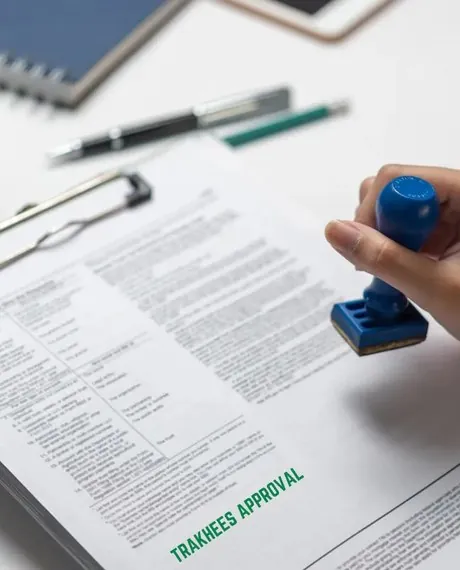
Building Approvals Dubai has guided property owners, developers and businesses through Dubai approvals for over a decade. From the first submission to final sign-off, we handle the paperwork and authority coordination so your project stays on schedule.
The team handled our DEWA and DCD approvals from start to finish, with clear updates throughout. Everything was submitted right the first time.
Getting our Trakhees NOC felt complicated until we brought this team in. They knew exactly what the authority needed and got it sorted fast.
Professional from day one. Our warehouse modification approval was ready well ahead of schedule, with updates at every step of the way.
Building Approvals Dubai handles authority approvals for projects across every part of the city. Here are answers to the questions we hear most, covering DM, DCD, DEWA, and other authority approvals in Dubai.
Building Approvals Dubai manages authority approvals end to end, from document preparation to final sign-off, so you don't have to coordinate with each department yourself.
We prepare drawings, submit applications, follow up with authorities, and manage inspections until your approval or NOC is issued.
Simple approvals can take 5 to 10 working days, while larger projects involving multiple authorities may take a few weeks.
Most renovations, even minor ones, require some form of authority sign-off before work begins, particularly if structural or electrical changes are involved.
We review the authority's comments, revise the drawings, and resubmit, keeping your project moving without long delays.
Typically a trade license, title deed or tenancy contract, and initial drawings are enough for us to begin the assessment.
Yes, we offer fast-track handling for time-sensitive submissions where the authority allows expedited review.
Send us your project details through WhatsApp or the enquiry form, and we'll confirm scope and fees before any work begins.
For most interior work a tenant can go ahead and apply, as long as the landlord or building management agrees to it in writing. Structural changes or anything touching the exterior usually need the owner to be the applicant, so it is worth confirming who is who before any drawings are paid for.
They are separate things. A trade licence lets you run the business, while a fitout approval is the authority's permission to carry out the physical works in the unit. Having one does not replace the other, so it helps to run both in parallel instead of waiting for the licence first.
Yes, and it often saves money. An early check tells you which authority your site falls under and what it will and will not allow, so your designer is not drawing something that cannot be approved. The formal submission still needs complete drawings, but the groundwork can start sooner.
Usually, yes. Send the files over and we will go through them against what the relevant authority expects. If anything needs fixing, you will hear about it before submission rather than after a rejection, which tends to be quicker for everyone.
Not normally. Applications are made through the authorities' online systems, and documents like a title deed, trade licence or passport copy can be shared digitally. The only thing that needs someone physically present is site work, such as an inspection, and your contractor or a representative can cover that.
Usually not on their own. Concept and design drawings show how a space will look, but authorities look for technical drawings: layouts, fire and life safety details, and services such as electrical and HVAC. Those typically have to come from a registered consultant, so it is worth planning for them alongside the design.
As soon as the layout is reasonably settled. Contractors generally cannot start work on site until the permit is in hand, and approvals rarely run on the schedule people hope for. Building in some buffer between approval and mobilisation is much cheaper than paying a contractor to wait.
Yes, quite a bit. A villa in a master community often needs the developer's sign-off alongside the municipality, so a DM approval is only part of the picture. Apartments bring in the building management, while commercial units in business parks may fall under DDA approval instead, with fire and life-safety checks through DCD approval for many commercial spaces.
Just the basics: where the property is, whether you own or rent it, what work you are planning, and roughly how big it is. Photos, a floor plan or any earlier approvals help if you have them, but you do not need a complete file to start the conversation.
We are available Monday to Saturday from 8:00 AM to 11:00 PM and on Sundays from 8:00 AM to 5:00 PM. The quickest routes are a phone call or WhatsApp on +971 58 957 5610, and you can send documents to info@buildingapprovals.ae.
Yes, every project gets a dedicated project manager who is your single point of contact. They coordinate with the authorities on your behalf, so you are not chasing several departments or repeating yourself.
Your project manager keeps track of each submission and tells you when something changes, whether that is an approval, a comment from the authority or a request for another document. If you would rather check in yourself, you can message or call at any time.
It is more common than you might think, especially with older properties or work done by a previous owner. The usual first step is finding out what the authority actually holds, and if nothing useful exists, a registered consultant may need to prepare as-built drawings before the new work can be approved. Better to learn that at the start than halfway through the project.
A change while the application is still in review can often be handled by revising the drawings and resubmitting. Once the approval is issued, a layout change generally needs its own amendment, so it is best to settle the layout before you submit rather than after.
Many permits and NOCs carry a validity period, and it differs by authority and type of approval. Check the validity date on yours when it is issued, and talk to us well before it lapses; renewing or extending is far easier than starting again.
Because the route depends on more than the type of work. Location (a free zone, a master community or a plain municipal area), the building's use, and its size and fire risk can all change who signs off. That is why Dubai approvals rarely follow one template, and why two similar-looking jobs can end up with different paperwork.
Usually it is small things: drawings that do not match the documents, a missing landlord NOC, an unclear scope, or an application sent to the wrong authority. None of them are hard to fix, but each one can send the file back and cost days, so a proper check before submitting pays off.
They do. Buyers, tenants and their lawyers often ask for the permits behind any modification, and unapproved work can slow a sale or a handover. Keeping a clean record of your building approvals now saves awkward conversations later.
Keep the permits and NOCs, the approved drawings, and any completion or final clearance certificates together in one folder. You will want them for insurance, for your landlord or a buyer, and for the next time you change something, since authorities often ask what was approved before.
Yes. Whatever you share is used only to prepare and submit your application, and it goes to the authorities only where the application needs it. We do not pass project details on for any other purpose.
Start with two questions: where is the property, and what do you want to do with it? Those answers decide which authorities are involved, and everything else follows from there. Send us those two details and we will tell you, in plain language, which approvals your project is likely to need.
Do not just guess at a reply. Authority comments can be short and technical, and a wrong response can send you back to the start of the review. Pass them to your project manager, who will explain what is being asked and prepare the revised drawings or documents.